How to Make a Paycheck Budget
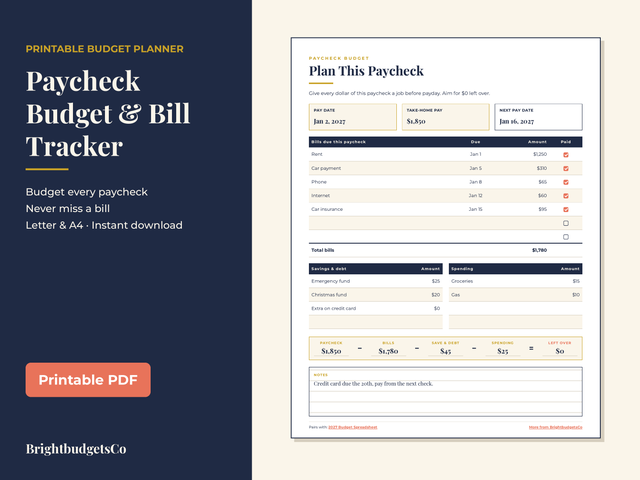
A paycheck budget plans your money one paycheck at a time instead of one month at a time. If you're paid biweekly or weekly, it's the easiest way to make sure every bill is covered before the money runs out.
Step 1: List your pay dates and amounts
Write down every payday for the month and the take-home amount. Biweekly earners get two "extra" paychecks a year — plan those separately.
Step 2: List bills with due dates
Rent, utilities, phone, insurance, subscriptions and debt minimums, each with its due date.
Step 3: Assign each bill to a paycheck
Give each bill to the paycheck that arrives before its due date. If one check is overloaded, ask a company to move a due date — most will.
| Paycheck | Amount | Bills assigned |
|---|---|---|
| 1st | $1,600 | Rent $1,100, phone $60, car insurance $120 |
| 15th | $1,600 | Utilities $180, car payment $290, card minimum $110 |
Step 4: Plan the rest
From each check's leftovers, set amounts for groceries, gas and fun money, then a savings or sinking-fund transfer. Aim for every dollar to have a job — a zero-based paycheck budget.
Step 5: Track and adjust
Check in on payday. Move what's left over to savings or your debt snowball, and adjust next check's plan if something ran short.
Templates that make it easier
- Paycheck Budget Planner Printable with bill tracker and biweekly worksheet.
- 2027 Budget Spreadsheet for Google Sheets and Excel with a paycheck plan built in.
- Budget App for iPhone, Android and PC, no subscription.
- Cash Envelope Printables if you like cash stuffing.
Start with the free 5-Day Money Reset
A free printable 5-day workbook to reset your money, sent to your inbox.
Get it free